












The regulation of alcohol consumption is increasingly understood through a complex liver-brain axis, where the liver acts as a hormonal sensor that communicates directly with the brain to limit intake. Central to this link is the liver-derived hormone Fibroblast Growth Factor 21 (FGF21), which functions as an endocrine “satiety” signal specifically for alcohol and simple sugars.
The Liver-Brain Feedback Loop
Research has identified a bidirectional communication system that governs drinking behavior:
- Hormonal Trigger: Acute alcohol ingestion causes the liver to rapidly secrete FGF21 into the bloodstream.
- Neural Signaling: FGF21 crosses the blood-brain barrier and binds to a specific receptor complex (β-Klotho/FGFR1) located in brain regions such as the basolateral amygdala (BLA) and the hypothalamus.
- Consumption Control: Activation of these neural circuits, particularly those projecting from the BLA to the nucleus accumbens, suppresses the motivation to consume more alcohol.
- Compensatory Behaviors: Beyond reducing “appetite” for alcohol, FGF21 stimulates water intake to protect against alcohol-induced dehydration.
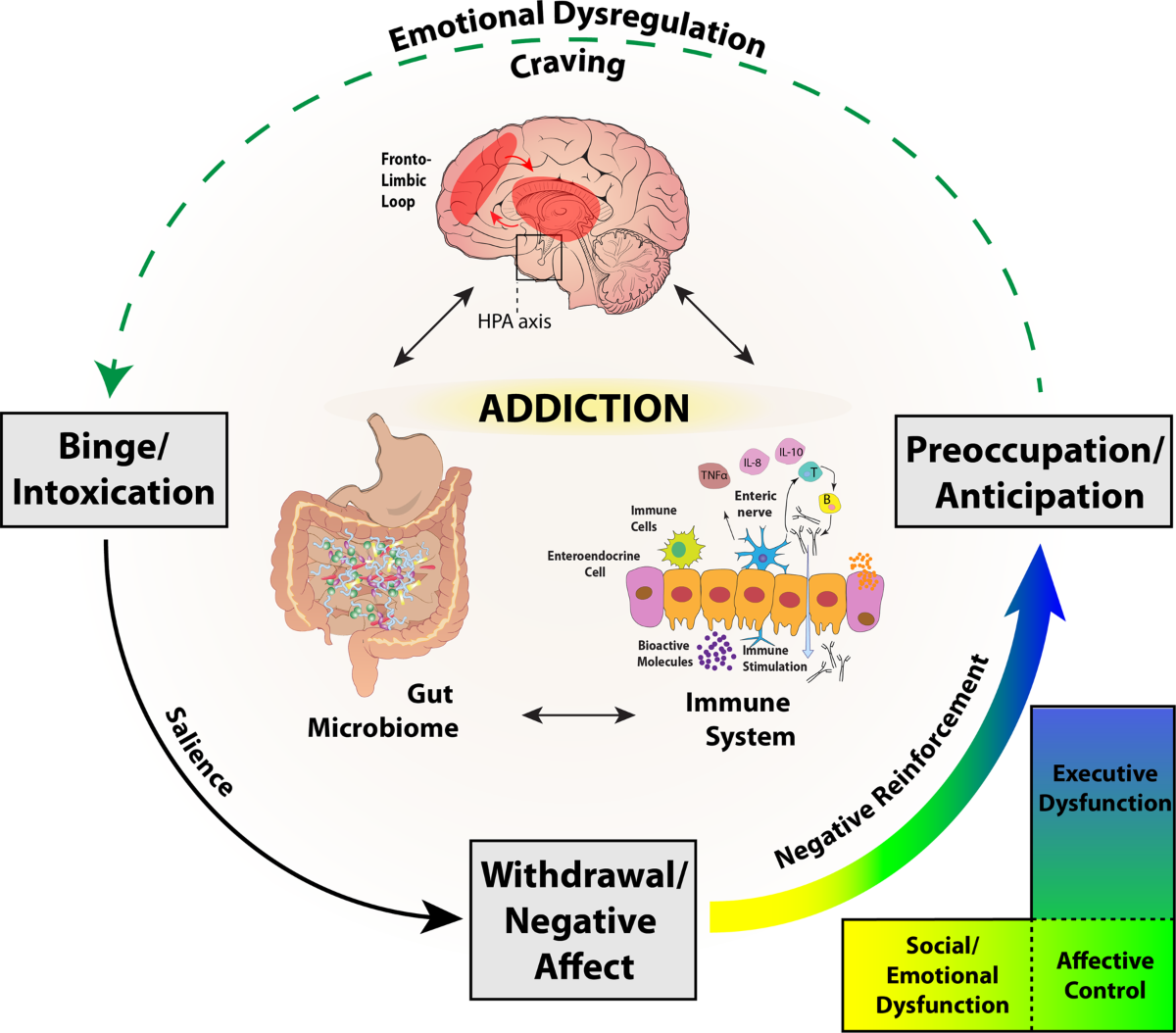
Systemic Impact: Gut-Liver-Brain Axis
While the liver-brain axis primarily regulates intake, it operates within a broader gut-liver-brain framework that impacts overall health:
- Gut Dysbiosis: Alcohol disrupts the gut microbiome, increasing intestinal permeability (“leaky gut”).
- Neuroinflammation: Translocated bacterial endotoxins (like LPS) from the gut reach the liver and brain, triggering inflammatory responses that can worsen addiction cycles and cognitive decline.
- Toxic Lipids: Alcohol-induced liver stress leads to the production of ceramides, which cross into the brain and cause insulin resistance and white matter degeneration.
Therapeutic Potential
The discovery of this axis has opened new avenues for treating Alcohol Use Disorder (AUD) and Alcohol-Associated Liver Disease (ALD):
- FGF21 Analogs: Drugs that mimic FGF21 (e.g., PF-05231023) have successfully reduced alcohol consumption by up to 50% in non-human primates.
- Microbiome Modulation: Probiotics like Faecalibacterium prausnitzii have shown promise in repairing the blood-brain barrier and improving cognitive function in animal models.
- Precision Medicine: Human genetic studies indicate that variations in the FGF21 and KLB genes predict individual differences in alcohol consumption and liver disease risk, suggesting future personalized treatment strategies.
Would you like to explore the specific clinical trial results for FGF21 analogs or more details on how probiotics might mitigate alcohol-induced brain damage?
Copyright@Drrjb










Discussion about this post