










The Nepal Medical Association (NMA) Election 2083 (2026 AD) is a pivotal event for the medical fraternity in Nepal, determining the leadership of the nation’s oldest and most influential professional body for doctors. As the current executive committee’s tenure (2023–2026) nears its conclusion, the upcoming election is expected to address critical issues ranging from physician safety and fair pay to the evolving landscape of medical education.
Background and Context
The NMA typically conducts elections every three years. The current leadership, led by Dr. Anil Bikram Karki, assumed office in early 2023. Historically, these elections are more than just internal professional votes; they often reflect broader ideological alignments within the medical community, often categorized into professional groups like the Democratic (associated with the Nepali Congress) and Progressive (associated with Leftist parties) panels.
Expected Timeline
While the exact schedule is finalized by the NMA Election Committee closer to the date, the cycle suggests:
- Voter List Publication: Early 2083 BS.
- Nominations: Usually several weeks before the polling date.
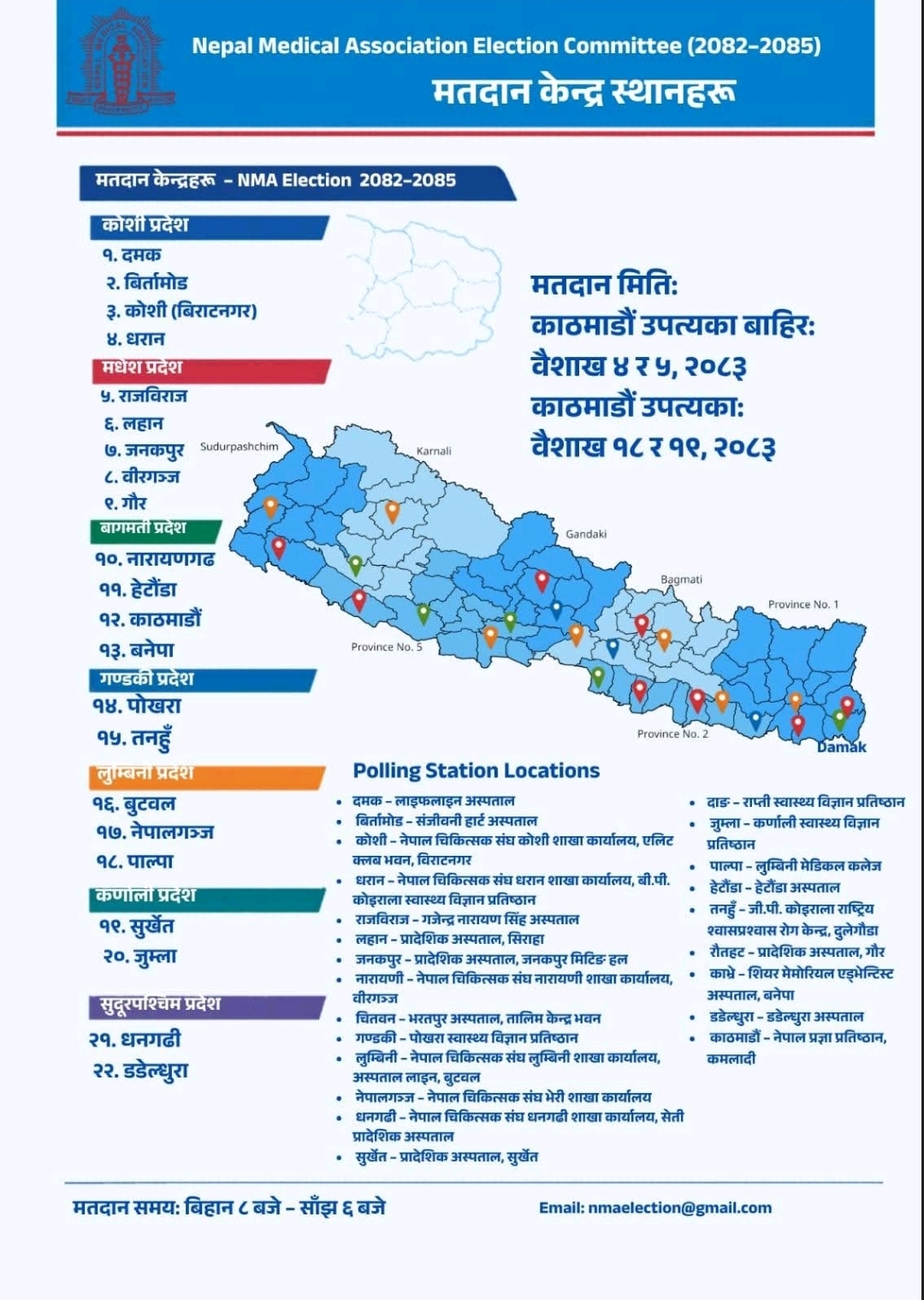
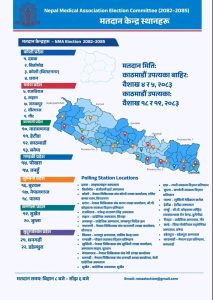
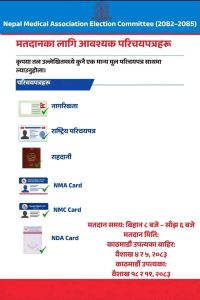
- Polling: Typically held in two phases—the first in major centers outside Kathmandu (such as Bharatpur, Biratnagar, and Pokhara) and the second phase in Kathmandu at the NMA headquarters.
Key Issues and Agendas
The 2083 election will likely be contested on several high-stakes agendas:
- Workplace Security: Following a surge in physical assaults on doctors across Nepal, candidates will be pressured to provide concrete plans for the effective implementation of the Security of Health Workers and Health Institutions Act.
- Federal Restructuring: The NMA has been working to align its organizational structure with Nepal’s federal system. The 2083 election will likely see a push for more decentralized authority to provincial branches.
- Medical Education and Advocacy: With the ongoing influence of the Medical Education Commission (MEC), the NMA’s role as a watchdog for postgraduate opportunities and the rights of resident doctors remains paramount.
- Doctor-Patient Trust: Bridging the widening gap between the public and medical professionals is a consistent challenge that the new executive body will need to navigate.
Election Dynamics
For a surgeon in a major medical hub like Bharatpur, the election holds local significance. Bharatpur has historically been a critical “battleground” for the first phase of voting. Candidates will likely focus heavily on regional issues, such as the management of large government hospitals and the integration of private medical institutions into national health insurance schemes.
The Road Ahead
The NMA serves as the primary negotiator with the Ministry of Health and Population. The outcome of the 2083 election will determine who leads the advocacy for:
- Standardizing the pay scale for medical officers and specialists.
- The “One Doctor, One Institution” (ODOI) policy.
- Improving the status of medical professionals seeking pathways for international fellowship or provincial service.
As the election approaches, the medical community anticipates a transition toward a leadership that balances traditional professional values with the digital and systemic demands of modern healthcare in Nepal.
Copyright©DrRj MedicoNepal 2026









Discussion about this post